
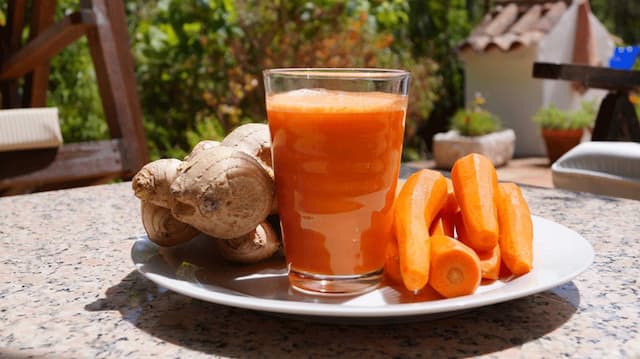
A root with a long history
Ginger turns up on our juice menu more often than almost anything else, and for good reason. Native to South-East Asia, it's been used in folk medicine for centuries, and a growing body of research is catching up with what traditional practice already assumed.
What it seems to do
Adding ginger to your diet appears to help moderate the rise in blood sugar after eating, and regular use is linked to improved insulin sensitivity, meaning the body needs to produce less insulin to do the same job. Several studies point to real relief from menstrual cramps, in some cases comparable to over-the-counter pain relief, and one trial found women with heavy periods roughly halved their blood loss with regular ginger. Athletes who include it in their diet report less muscle soreness and quicker recovery after exercise. It's also one of the better-evidenced remedies for nausea, including motion sickness, and is often recommended alongside chemotherapy for the same reason. There's even research suggesting it performs comparably to prescription medication for migraine relief, without the side effects or the cost.
How it works
Much of this comes down to ginger's effect on inflammation. It appears to work in a similar way to common anti-inflammatory painkillers, but without irritating the gut in the same way — if anything, it seems to protect the digestive tract rather than aggravate it. Most of the research uses roughly a teaspoon of ginger powder a day, and drying or gently heating ginger seems to concentrate its most active compounds rather than diminish them.
How we use it
We serve guests a ginger and apple shot a couple of times a week, and it pairs beautifully with other root vegetables — carrot in particular makes a bright, warming juice that's become one of our house favourites. Fresh, dried or cooked, it earns its place in the kitchen either way.
